
The Human Evolution of Time
Introduction
For the prehistoric hunter-gatherer, time was a fluid organic presence - an infinite loop dictated by the ripening of wild plants, the migration of herds, and the changing shadows of the solstice. To our ancestors, time was not a resource to be managed, but a cycle to be lived. However, as human civilisation transitioned from the cave to the field, and eventually to the factory floor, this relationship underwent a radical transformation. The invention of the mechanical clock chopped the fluid flow of existence into discrete, billable units, shifting the human perspective from co-existence to one of structure and control.

The Prehistoric and Ancient Era
Long before the invention of ticking hands or digital displays, the measurement of time was intrinsically bound to the natural rhythms of the world. For prehistoric hunter-gatherers, time was neither an abstract mathematical concept nor a commodity to be saved and spent. Human activity was governed primarily by internal biological clocks—circadian rhythms that responded directly to the rising and setting of the sun—and external environmental triggers. Early humans relied on what anthropologists call "phenological time"—a framework where moments were marked not by numerical hours, but by ecological milestones: the blooming of specific flora, the arrival of migratory birds, or the rising of rivers during seasonal thaws. In this model, time did not move in a straight line toward a distant future; it rolled continuously in an eternal loop of death and rebirth; light and dark; dry and wet; and warm and cold. Time was essentially a nested hierarchy of cycles.
As human societies gradually shifted from nomadic foraging to settled agriculture during the Neolithic period, the need to anticipate environmental shifts became vital for survival. Planting crops and managing livestock required a more structured, long-term tracking of seasons. Early humans began observing celestial bodies to map out larger cycles, carving notch marks into bone artifacts—such as the famous 30,000-year-old Blanchard bone plaque—to track the lunar phases.

Eventually, early civilisations developed basic instruments to measure these celestial movements during the day. Ancient Egyptians designed sundials and gnomons—simple vertical pillars whose shifting shadows tracked the sun’s trajectory across the sky—dividing the day into daylight periods.
Yet, even with these early inventions, the fundamental nature of time remained flexible and cyclical. On a sundial, an "hour" in the middle of summer was physically longer than an "hour" in the middle of winter, as the daylight itself expanded and contracted. Early humans lived with time rather than outside it. Time was seen as a mythical repeating loop, reflected in the stories and religions of antiquity, which overwhelmingly viewed history as a series of repeating cosmic ages rather than a race toward an endpoint.
The Middle Ages
The medieval period marked a conceptual change in the perception of time: the separation of time keeping from the sky. While ancient civilisations measured time by observing the position of the sun or moon, medieval Europe initiated a transition toward artificial, mathematical standardisation. This shift was largely driven by monastic necessity. Benedictine monasteries required rigorous schedules for communal prayer, known as the Divine Office, which called monks to prayer seven or eight times across a 24-hour period. Because night offices like Matins occurred in total darkness, monks could no longer rely on sundials, prompting the development of early alarm mechanisms and weight-driven mechanical clocks.
The crucial technological breakthrough arrived in the late 13th century with the invention of the verge escapement—a mechanical device that regulated the release of a gear train at equal, repeating intervals. For the first time in human history, time was no longer dictated by the fluid, seasonal contraction and expansion of daylight. Instead, time became uniform, divided into 24 equal hours regardless of the season or time of night.
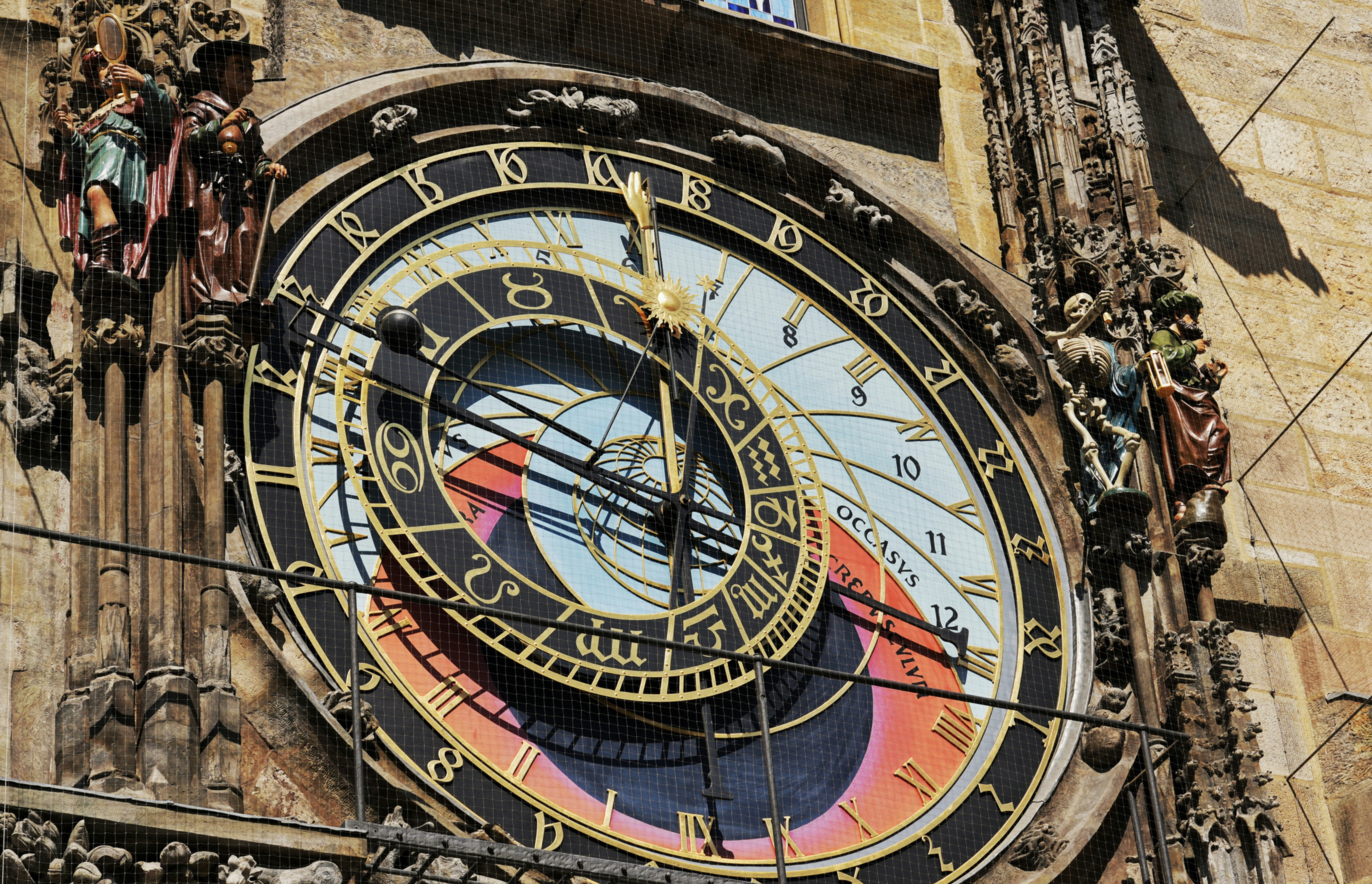
As mechanical clocks migrated from private monastic walls to public spaces, the nature of urban authority changed dramatically. Towns mounted massive public clocks atop cathedral spires and town halls. The tolling of church bells regulated urban life, dictating when markets opened, when work shifted, and when curfews began. Historian Lewis Mumford famously remarked that the mechanical clock, rather than the steam engine, was the foundational machine of the modern industrial age because it taught humanity to coordinate collective behaviour around abstract numbers.
By replacing the organic cycles of nature with the rigid tick of a human constructed mechanism, the Middle Ages established time as a collective rigid structure. Time ceased to be a shared natural environment in which human beings simply lived; it became an external, artificial framework to which human behaviour had to conform.
The Industrial Revolution
If the Middle Ages invented the mechanical clock, the Industrial Revolution of the late 18th and 19th centuries fundamentally weaponised it. The rapid expansion of steam power and mechanised manufacturing forever shattered the traditional, task-oriented rhythms of agricultural life. In pre-industrial societies, labour was largely dictated by the job itself: an artisan worked until a shoe was finished, or a farmer laboured as long as daylight allowed. Industrial capitalism replaced this organic workflow with structure and synchronisation. Factories required hundreds of workers to arrive simultaneously, start machine lines together, and work fixed shifts. Consequently, time was transformed from a fluid medium into a quantifiable resource to be bought, sold, and strictly audited.
This industrial restructuring gave rise to the modern concept of "clock time." As social historian E.P. Thompson famously observed, time became an instrument of social discipline. Factory whistles replaced cockcrows, and punch cards replaced sunset as the arbitrators of human labour. Workers were no longer paid merely for their output, but for their time—giving birth to the hourly wage. Phrases like "time is money," popularised by Benjamin Franklin, entered the cultural lexicon, reflecting a profound psychological shift: time was no longer something one simply lived, but a commodity that could be "spent," "saved," "wasted," or "lost."

Concurrently, the rapid spread of the railway system forced a radical geographic standardisation of time. Prior to the mid-19th century, nearly every town kept its own local solar time based on its specific meridian—meaning noon in London was several minutes different from noon in Bristol. However, high-speed train travel made these localised time pockets dangerous, leading to frequent train scheduling confusion and deadly collisions.
In response, British railway companies established "Railway Time" in the 1840s, standardising time across the nation using Greenwich Mean Time (GMT). This push for global synchronisation culminated in the 1884 International Meridian Conference, which carved the planet into 24 distinct time zones. By standardising time across vast geographic distances, industrial society successfully subjugated global geography to the relentless, uniform march of the clock.
The Modern Era
In the modern digital era, the measurement of time has broken free from planetary mechanics entirely, descending into subatomic physics and microsecond algorithms. In 1967, the International System of Units officially redefined the SI second: no longer a fraction of Earth’s orbital rotation around the sun, but the duration of exactly 9,192,631,770 oscillations of a caesium-133 atom. Through atomic clocks, global satellite constellations, and Network Time Protocol (NTP) servers, humanity achieved absolute temporal precision across the globe. Today’s high-frequency stock trading, GPS navigation systems, and cloud databases depend on synchronisation accurate to nanoseconds.
However, this hyper-precision has produced a profound psychological paradox. While our devices track time with subatomic exactness, human experience within that framework has become increasingly fragmented. The rise of the internet, smartphones, and instantaneous global connectivity, has blurred the physical boundaries between work and rest, public and private life. Time is no longer segmented by distinct factory shifts or daytime light; instead, it operates as an "always-on" continuous stream. Notification feeds, micro-content, and real-time messaging collapse distance and history into an overwhelming present.
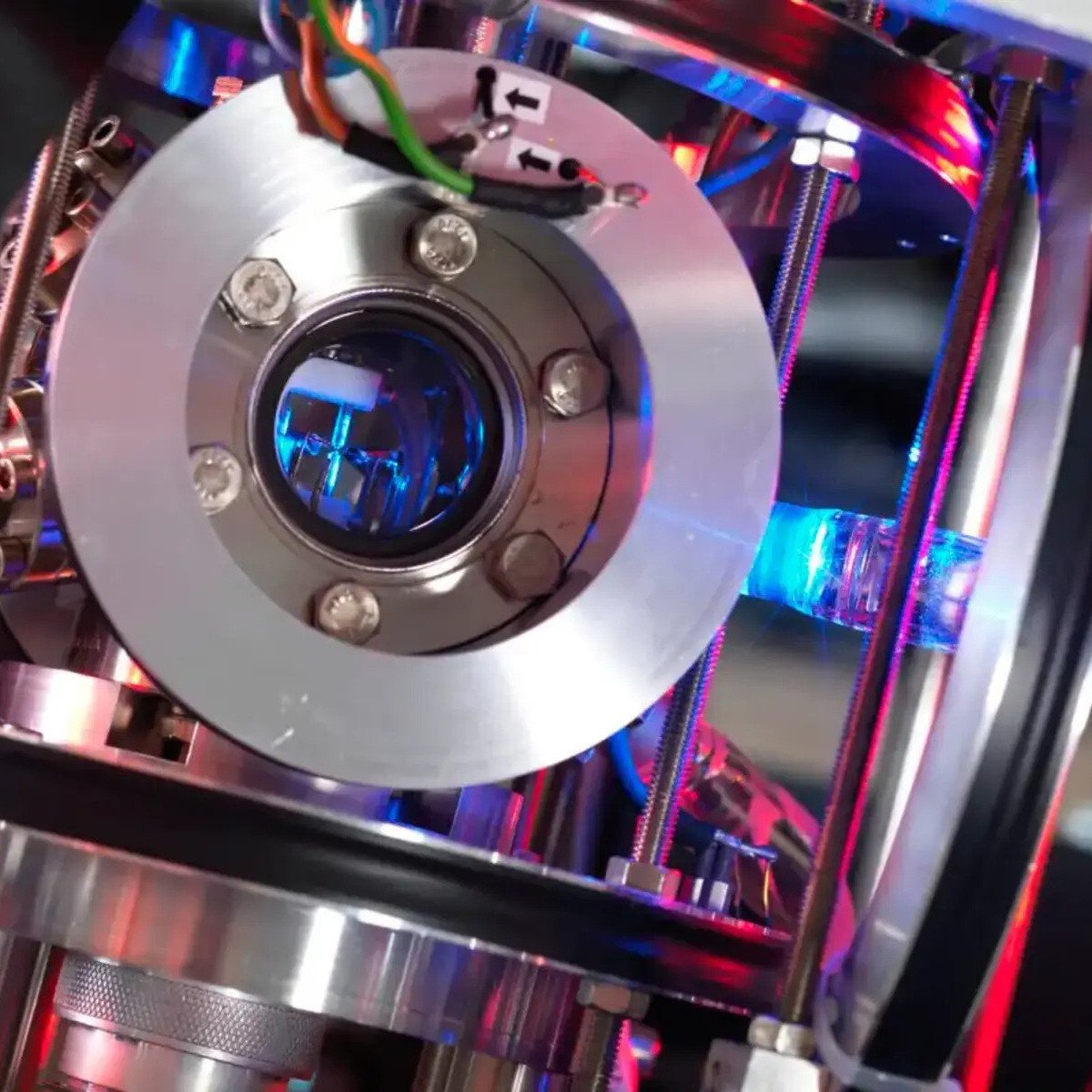
This technological evolution has transformed time from an industrial resource into a psychological pressure point. Where industrial workers fought for a shortened workday, contemporary digital citizens suffer from systemic "time poverty"—the subjective feeling of perpetually running out of time despite living in the most technologically automated era in human history. By accelerating communication speeds, digital technology has effectively eliminated natural pauses and transition periods. In mastering time down to the billionth of a second, human culture has created an environment where the present moment is constantly compressed, disrupted, and spent before it can be fully inhabited.
Conclusion
The trajectory of human civilisation can be fundamentally traced through its changing relationship with time. What began as an organic, cyclical immersion in the rhythms of the natural world has transformed into a hyper-precise, linear construct designed to structure every facet of modern society. In shifting from phenological markers to cogs and wheels, industrial factory shifts, and ultimately atomic oscillations, humanity successfully mastered the art of time measurement. Yet this mastery has come at a distinct psychological cost.
By converting time from an environment to be lived into a finite commodity to be optimised, modern culture has traded presence for productivity. The prehistoric hunter-gatherer, lacking clocks, lived within time’s generous, repeating flow; the modern digital citizen, surrounded by hyper-synchronised screens, finds themselves perpetually fighting against its relentless depletion. Ultimately, the story of time is the story of human alienation from nature. Reclaiming a sense of temporal well-being in the modern world may not require abandoning our atomic clocks, but rather remembering what our ancestors instinctively knew: that time is not merely a resource to be spent, but the very medium of human experience.
Post Script
While human history traces our relentless progress in measuring, standardising, and commodifying time, modern physics presents an ironic paradox: science still cannot agree on what time actually is.
For centuries, Newtonian physics viewed time as an absolute, universal backdrop—a cosmic clock ticking at the exact same rate everywhere in the universe. Einstein shattered this view with his theories of relativity, proving that time is flexible, relative, and interwoven with space. Time slows down near massive gravitational bodies and decelerates as objects approach the speed of light. Yet, relativity still assumes time flows continuously from past to future.
At the quantum scale, the picture becomes far stranger. The fundamental equations of quantum mechanics are entirely time-reversible; they function identically whether time flows forward or backward. Moreover, leading theories in quantum gravity, such as Loop Quantum Gravity and String Theory, suggest that time may not even be a fundamental feature of reality at all. Instead, it may be an emergent phenomenon—much like temperature, which does not exist at the level of a single atom but emerges from the collective motion of trillions of molecules.

Furthermore, physicists remain locked in debate over the "Arrow of Time"—why we experience time moving strictly in one direction. The Second Law of Thermodynamics, argues that time’s direction is merely the relentless increase of entropy (disorder) in the universe.
Thus, as we move from sundials to caesium-133 atomic clocks, our technological mastery of time conceals a fundamental ignorance. We have mastered how to measure its increments with subatomic precision, yet whether time is an absolute stream, a subjective illusion, or a byproduct of quantum entanglement remains one of the greatest unsolved mysteries in science.


Comments